Parametric Insurance in the Blue Economy: A Pathway to Sustainability
Jonathan Barratt
University of Southern Queensland/CelsiusPro
Abstract
Parametric Insurance solutions offer sustainable outcomes to farmers looking to hedge lost income caused by adverse weather events. In agriculture adverse weather events during production reduce yield, income and destabilizes communities. Catastrophic events such as cyclones, drought, flood, high and low temperatures can also affect global food security. Parametric Insurance solutions are helping food producers manage this income instability. Catastrophe climatic events also occur in the ocean, but producers have little forms of insurance to fall back on. Marine Heat Waves (MHW) are one such occurrence that causes considerably yield loss for those involved in aquaculture. Salmon farming in Tasmania is an AUD$500 million per annum industry. MHW are responsible for yield losses. Here we present a novel parametric insurance approach to show how such a Salmon farming operation in Tasmania can meet the challenges of income loss caused by MHW by adapting a parametric solution to cover MHW risk.
Insurance products were designed to cover lost income due to reduced yield risks associated with MHW. Our research shows how parametric insurance can help safeguard income and contribute to the financial sustainability of climate vulnerable communities involved in mariculture globally.
Key Words
Index-based insurance, marine heat waves, salmon, management practices.

Jonathan Barratt
Developing AquaWatch
Dr Alex Held
Mission Lead, AquaWatch Australia, CSIRO

Alex Held
Biography
Dr. Held is currently the AquaWatch Australia Mission Lead at the Centre for Earth Observation in the CSIRO Space and Astronomy Business Unit. Alex serves as the CSIRO Principal on the international Committee on Earth Observation Satellites . Previously, Alex served as a co-lead of the “Landscapes Assessment” facility of Australia’s “Terrestrial Ecosystem Research Network” – TERN, which provides free and open access to various satellite-derived products for ecosystem science and land management. He also served as the Head of COSSA (the CSIRO Office of Space Science and Applications) from 2004 -December 2007, representing Australia at several space-related international committees, and served as member of the National Committee for Space Science of the Australian Academy of Science. He was part of the team which held the 2016 Chair of the international Committee on Earth Observation Satellites – CEOS. He is a plant physiologist from the University of California, Davis, and has been linking remote sensing and vegetation mapping at CSIRO since arriving in Australia 29 years ago.
Operational seasonal prediction services to support marine end user decision making
Claire Spillman, Bureau of Meteorology
Claire Spillman
Biography
Dr Claire Spillman is a Principal Research Scientist and leads the Seasonal and Marine Applications Team in Research at the Bureau of Meteorology, Australia. Her current research is focused on seasonal forecasting for marine applications, particularly marine heatwave prediction, coastal hazards, and reef, aquaculture and fisheries management.
Dr Spillman is an Associate Investigator in the Centre of Excellence for Climate Extremes (CLEX), a member of the IMOS Science and Technology Advisory Committee and the Australian representative on the WMO Subseasonal to Seasonal (S2S) Project Steering Committee. She is frequently called on to give media interviews, public webinars and to contribute to government and industry.
Marine heatwaves – forecasting to enhance industry resilience
Alistair Hobday1, Claire Spillman2, Jason Hartog3, Grant Smith4
1CSIRO Environment, Castray Esplanade, Hobart, Tasmania. Alistair.Hobday@csiro.au
2Bureau of Meteorology, Melbourne, VIC 3001, Australia Claire.Spillman@bom.gov.au
3CSIRO Environment, Castray Esplanade, Hobart, Tasmania, Jason.Hartog@csiro.au
4Bureau of Meteorology, Melbourne, VIC 3001, Australia, Grant.Smith@csiro.au
Abstract
Forecasts of marine environmental and ecosystem conditions are now possible at a range of time scales, from nowcasts to forecasts over seasonal and longer time frames. We will provide examples of new marine heatwave seasonal forecasts for Australia and discuss the response options at different leadtimes (e.g. 4 months, 2 months, 1 month) ahead of an event. To benefit from a forecast, a marine business will need to be agile to respond to changing information and response options. The management agility of different marine businesses in fisheries, aquaculture, and tourism can influence their ability to use seasonal forecast information effectively, and potentially modify the usual negative relationship between resilience and the frequency of the stress event, thus reducing the impact of extreme events. Engagement between forecast developers and marine users can also improve responses, while at the same time, improving the agility of businesses can enhance overall resilience to extreme events and lower their risk.
Reading
Hartog, J. R., C. M. Spillman, G. Smith and A. J. Hobday (2023). Forecasts of marine heatwaves for marine industries: reducing risk, building resilience and enhancing management responses. Deep Sea Research II: https://doi.org/10.1016/j.dsr1012.2023.105276.
Key Words
Climate variability, risk management, extreme events, forecast, agility

Alistair Hobday
Biography
Alistair is a Research Director at CSIRO Environment, leading the Sustainable Marine Futures Program. This program covers domestic and international fisheries, conservation and biodiversity management, marine pollution, and climate change adaptation. In addition to this role, his research focus has been the study of environmental influences on the distribution and abundance of marine species. His projects have included documenting the impacts of climate change on marine biodiversity and fishery resources, and developing, prioritising and testing adaptation options to underpin sustainable use and conservation into the future. He has worked in multi-disciplinary teams and seeks to support management and policy uptake of research, via co-production with stakeholders.
The CSIRO Atlas of Regional Seas 2022: a new marine climatology for Australia
Chris Chapman1, Thomas Moore2, Rebecca Cowley3, Christopher Roach4
1CSIRO Environment, GPO Box 1538, Hobart, Tasmania, Australia, 7001, Chris.Chapman@csiro.au
2CSIRO Environment, GPO Box 1538, Hobart, Tasmania, Australia, 7001, Thomas.Moore@csiro.au
3CSIRO Environment, GPO Box 1538, Hobart, Tasmania, Australia, 7001, Rebecca.Cowley@csiro.au
4Institute of Marine and Antarctic Studies, University of Tasmania, Hobart, Tasmania, Australia, 7000, christopher.roach@utas.edu.au
Abstract
Despite the recognized importance of the ocean on the terrestrial and coastal environmental conditions, critical data and process-based environmental intelligence to support management decisions in areas of national importance is lacking. Stakeholder engagement has revealed that, in key regions, we lack critical “baselines” of important oceanographic variables, such as temperature, salinity and ocean acidity. These baseline data form a foundation of monitoring that underpins the expert ocean intelligence that informs management decisions. However, the lack of an oceanographic “baseline” does not stem wholly from a lack of available observations, but also from an underutilization of existing observations and lack of synthesis. This is particularly true over the shallower continental shelf and coastal regions, where Argo floats cannot operate.
We will present preliminary results of a project to provide a high quality, detailed regional ocean “Atlas” to empower decision-making and respond to the needs of society. This project will modernize the well-known CSIRO Atlas of Regional Seas (CARS), last updated in 2009, by taking advantage of modern oceanographic observations and developments in software engineering and machine learning. The project will synthesize measurements to create a 3-dimensional “atlas” of oceanographic properties around Australia, including shallower regions on the continental shelf.
Key Words
Ocean observations, ocean temperature, ocean salinity, coastal ocean, ocean climatology, machine learning
Rebecca Cowley
Biography
Rebecca is a Senior Experimental Scientist with CSIRO Oceans and Atmosphere, Australia. She develops quality control procedures and data analysis tools for various oceanographic data including deep-water moorings from the Indonesian Throughflow and East Australian Current datasets and XBT data. Previously she managed the Argo data system, was a sea-going hydrochemist and participated in many voyages in various roles.
Rebecca leads the IMOS XBT Ship of Opportunity program at CSIRO and is involved in many international committees including the Ship Of Opportunity Program Implementation Panel (SOOPIP), International Quality-controlled Ocean Database (IQuOD) project and Global Salinity and Temperature Profile Program (GTSPP).
Fishing for ocean data – An industry and IMOS partnership
Véronique Lago1, Moninya Roughan2, Ian Knuckey3, Russsell Hudson4, Paul Van Ruth5
1 University of New South Wales, Sydney, NSW, 2052, v.lago@unsw.edu.au
2 University of New South Wales, Sydney, NSW, 2052, mroughan@unsw.edu.au
3 Fishwell Consulting, 27 Hesse Street, Queenscliff, Victoria, 3225, ian@fishwell.com.au
4 Fishwell Consulting, 27 Hesse Street, Queenscliff, Victoria, 3225, russell@fishwell.com.au
5 Integrated Marine Observing System, Hobart, Tasmania, 7004, paul.vanruth@utas.edu.au
Abstract
Knowledge of the 3-D structure of ocean temperature is critical for understanding ocean circulation, heat uptake, and abundance and distribution of marine life. With satellite technology, we get near global coverage of surface ocean temperatures, but we still need to deploy instruments to collect information in the ocean interior. Globally, sub-surface observations are the biggest gap in the temperature record. Using commercial fishing gear as a research data platform has been increasing in popularity internationally and now in Australia. Here we introduce FishSOOP, Australia’s pilot Fishing vessel contribution to the Ship of Opportunity Program. Operating since early 2023 we have instrumented more than 10 vessels around Australia to collect temperature data with every fishing set. In only a few months we have collected over 2000 temperature profiles, equating more than 320,000 data points. Data has been collected on the Australian shelf, including extremely remote northern waters where there is currently virtually no data. Data are returned in near real time, QC’d automatically, and returned to the fishers. FishSOOP already provides a step-change in the amount of open access temperature data available at low cost and will provide critical information to marine industries, highlighting the benefit of research-industry collaboration to fill in gaps in observations.
Key Words
Ocean temperature, Coastal ocean, Dataflow, Database, Ocean observing, SOOP
Véronique Lago
Biography
Véronique is an ocean data scientist working on the FishSOOP project, in collaboration with the fishing industry, to put temperature sensors on fishing gears. Prior to this position, she worked as a postdoc at the Climate Change Research Centre, at UNSW, looking at the formation of Antarctic Bottom Water. Véronique completed her PhD at UTAS decomposing the effect of surface forcing on the ocean interior. She also worked in Canada on the impact of Greenland’s ice sheet melting on deep water formation and subpolar circulation, and worked at sea, in the Arctic, as part of the IPY-CFL and ArcticNet projects.
New Ocean Remote Sensing Products and Opportunities for Operational Oceanography
Helen Beggs1, Pallavi Govekar2
1 Bureau of Meteorology, 700 Collins St, Docklands, Vic, 3008, helen.beggs@bom.gov.au
2 Bureau of Meteorology, 700 Collins St, Docklands, Vic, 3008, pallavi.govekar@bom.gov.au
Abstract
International Space Agencies are developing and launching satellite sensors with higher spatial and temporal resolution, providing more detailed information of the surface ocean in highly dynamic frontal regions and near coastal regions. This presentation will focus on recently developed, and future planned, high-resolution remotely sensed ocean products of sea surface temperature (SST), sea surface height (SSH), and sea ice variables (cover, edge and thickness), that have potential to provide step change benefits to operational ocean models and applications, particularly at the Bureau of Meteorology. We will describe new 2 km resolution SST products from Himawari-9 and NOAA-21/VIIRS, and 15 km resolution SSH products from SWOT, and their potential benefits for ocean models. In addition, higher resolution ocean products from satellite missions planned for launch by 2025 will be briefly discussed, including CNES/ISRO’s TRISHNA (SST, sea ice cover, ice edge and ice thickness), ESA’s MetOp-SG-A1 (SST), JAXA’s AMSR3 on GOSAT-GW (SST, sea ice cover, marine winds), and NASA/ISRO’s NISAR L/S-band Synthetic Aperture Radar (marine winds/tropical cyclones, internal waves/tides, sea ice cover/type, iceberg and ship detection).
Key Words
Satellites, high-resolution, sea surface temperature, sea surface height, sea ice, Synthetic Aperture Radar
Helen Beggs
Biography
Helen has worked as a satellite oceanographer within the Bureau of Meteorology’s research programs since 2003, developing new sea surface temperature products for the Bluelink Ocean Forecasting Australia Project and Integrated Marine Observing System (IMOS). Recently, Helen was Principal Investigator for ocean applications for the Bureau’s Synthetic Aperture Radar Pathfinder Mission Study. Prior to joining the Bureau, Helen wintered at Macquarie Island and Casey Station as an Atmospheric and Space Scientist and supported the Marine Facilities at CSIRO in Hobart, spending many months at sea. Helen’s goal is to provide the most appropriate earth observation satellite products to users.
Investigating Data Assimilation Methodologies for Improved Swell Prediction Accuracy
Marzieh H. Derkani 1, Jeff Hansen 2, Stefan Zieger 3, Seyed Mostafa Siadatmousavi 4, Duphrin Joseph 2
1 Oceans Graduate School, The University of Western Australia, Perth, Australia
2 School of Earth Sciences, The University of Western Australia, Perth, Australia
3 The Australian Bureau of Meteorology, Melbourne, Victoria, Australia
4 Iran University of Science and Technology, Tehran, Iran
Abstract
Intense westerly winds blowing across the Southern Ocean over almost unlimited fetches generate long, fast-moving swell waves that propagate into the Indian, Pacific, and Atlantic Oceans. Despite the significant developments in numerical wave models over the past four decades, swell prediction remains impaired by biases in height and arrival time. These biases are associated with limited understanding of physical processes active in swell propagation and dissipation, and their incorporation in numerical models, as well as inaccuracies in hydrodynamic and atmospheric forcings. However, the increasing number and type of wave observations in the ocean coupled with new analysis techniques create avenues for enhancing wave prediction models. Here, we explore the use of data assimilation methodologies to improve swell prediction on Australia’s Northwest Shelf. Observations are utilised spanning the Southern Ocean (i.e., swell generation zone), the Indian Ocean (i.e., swell propagation path), and the Northwest Shelf. Observational data includes measurements from a large network of drifting buoys and the newly launched China France Oceanography Satellite (CFOSAT). Buoy and satellite data will be assimilated into the WaveWatch-III wave model in various test cases using different data assimilation frameworks over selected swell events. The model’s performance will be evaluated for each scenario and the role of data assimilation in improved swell prediction accuracy will be discussed in detail.
Key Words
Surface Waves, Numerical Modelling, Data Assimilation
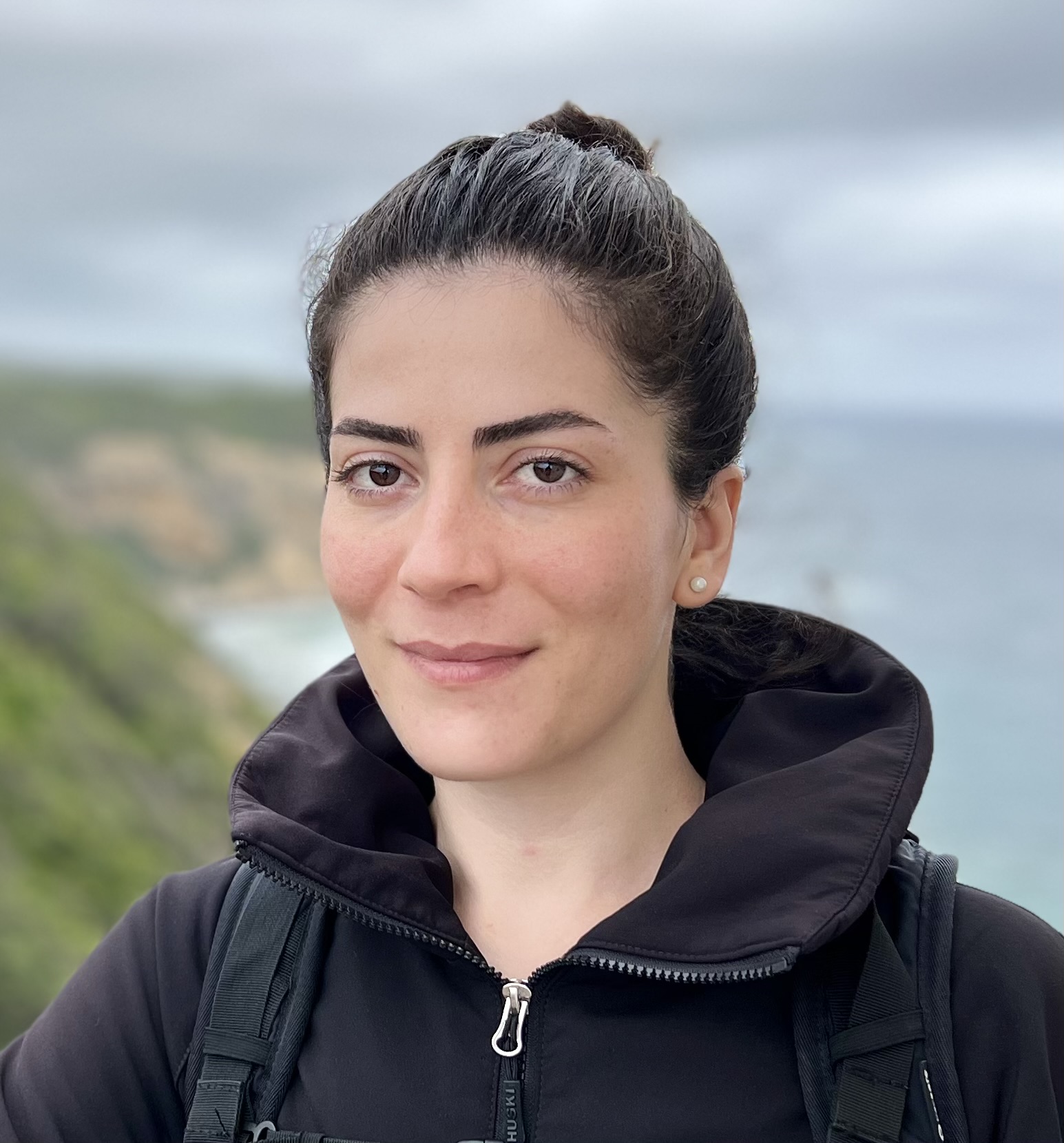
Marzieh Derkani
Biography
Marzieh is a Postdoctoral Research Fellow at the ARC Research Hub for Transforming Energy Infrastructure through Digital Engineering (TIDE) at Oceans Graduate School, The University of Western Australia. Her research at TIDE, being conducted under the supervision of Associate Professor Jeff Hansen, is focused on the applications of data science techniques (e.g., data assimilation) to the numerical modelling of water waves for improved predictions. Marzieh holds a PhD in Physical Oceanography and Ocean Engineering from The University of Melbourne. Further to her academic pursuits, she has gained professional experiences in the industry over multiples years working as a Civil and Coastal Engineer in Australia and overseas.
https://au.linkedin.com/in/marzieh-h-derkani-5ab700a2
https://twitter.com/marziehderkani?lang=en
https://www.researchgate.net/profile/Marzieh-H-Derkani
A Deep Learning Model for Forecasting Global Monthly Mean Sea Surface Temperature Anomalies
Ming Feng1, John Taylor2
1 CSIRO Environment, Crawley, Western Australia 6009 (ming.feng@csiro.au)
2 CSIRO Data61, Black Mountain, ACT 4563
Abstract
Sea surface temperature (SST) variability is important for the global weather and marine ecosystems and climate phenomena such as El Niño-Southern Oscillation (ENSO) regarded as a major source of interannual SST variability at the global scale. The ability to make long-range forecasts of SST variations and extreme marine heatwave events has potentially significant economic and societal benefits, especially in a warming climate. In this study, we have developed a deep learning U-Net SST prediction model, built on a convolutional neural network and long short-term memory, to predict global 2-dimensional SSTs up to a 24-month lead. The model prediction shows useful skills of more than 12 months in predicting SST anomalies in the Niño3.4 region, an ENSO index in the equatorial Pacific, and the Blob marine heatwave events in the northeast Pacific. However, the prediction of the 2015–2016 extreme El Niño is less satisfactory, which suggests that subsurface ocean information, which is not included in the training data, may be crucial for the evolution of this event. The prediction of the marine heatwaves in the southeast Indian Ocean, the Ningaloo Niño, has a short lead prediction. These results indicate the significant potential of data-driven methods to yield long-range SST predictions.
Reference: Taylor and Feng (2022), https://doi.org/10.3389/fclim.2022.932932
Key Words
Sea surface temperature, machine learning, forecast, ENSO, marine heatwaves

Ming Feng
Biography
Dr. Ming Feng is a physical oceanographer from CSIRO and specialised in ocean circulation, climate variability and biophysical research. He was the Node Leader of the Western Australia Marine Science Institution and the co-leader of the Integrated Marine Observing System in Western Australia, to promote oceanography research and implement observing systems on ocean boundary currents, interannual variability, and biogeochemical characteristics along the Western Australian coastline. Dr. Feng is a lead researcher in the Leeuwin Current variability and biophysical processes off the coast of Western Australia. Recently, he has been active in the research areas of decadal climate variations and marine heatwave events in the Indo-Pacific Oceans. He has also been involved in marine conservation research, western rock lobster recruitment, and marine biosecurity research in Western Australia.
Roadmap for Operational Wave Modelling at the Bureau of Meteorology
Stefan Zieger, Australian Bureau of Meteorology
Abstract
The Bureau of Meteorology’s operational wave forecast system (AUSWAVE) is part of the Australian Parallel Suite (APS). The wave model lags numerical weather prediction (NWP) development and is yet to be updated to match/follow the fourth generation NWP system (APS4). This talk will give an overview on current operational wave forecast systems and the new global wave ensemble system. Initial results and verification will be presented.
Biography
Stefan Zieger is a Senior Research Scientist in the Research Program and is the wave modelling lead at the Bureau of Meteorology. His interests include numerical modelling, wave verification, and wave climate.
Data sharing – Opportunities and pitfalls
Greg Williams1
1 RPS MetOcean, L3/500 Hay St, Subiaco, WA, 6008, Greg.Williams@RPSgroup.com
Abstract
Legal ownership of data and IP often constrain further data sharing and reuse. The agreement of the data owners is critical but difficult to secure across industry, contract, and international boundaries.
By examining a series of common metocean data collection and ownership frameworks we highlight the associated pitfalls and restrictions of each and suggest alternative approaches to data gathering that provide opportunities for wider data sharing in future.
Key Words
Metocean data sharing stewardship management reuse operational real-time
Greg Williams
Biography
Greg is a metocean specialist with over 25 years experience in the development of operational systems including forecaster workstations, realtime observation and satellite data-assimilation systems, large scale distributed processing systems, and interactive web-presentation and visualisation portals. He has managed modelling teams and data management services for major metocean companies and defence agencies, and technical metocean consultancy to a wide range of industry groups in 17 countries.
A Patchwork of Potentiality: Developing a global network of uncrewed surface vehicles for the Global Ocean Observing System
Ruth Patterson1, Meghan Cronin2, Sebastiaan Swart3, Sarah Nicholson4, Adrienne Sutton5, Jaime Palter6, Dongxiao Zhang 7
1 Elysium EPL, Darwin, Northern Territory, Australia, ruthpatterson@elysiumepl.com.au
2 NOAA Pacific Marine Environmental Laboratory, Seattle, Washington, U.S.A., Meghan.f.cronin@noaa.gov
3 University of Gothenburg, Gothenburg, Sweden, Sebastiaan.swart@marine.gu.se
4 Council for Scientific and Industrial Research, Brummeria, Pretoria, South Africa, snicholson@csir.co.za
5 NOAA Pacific Marine Environmental Laboratory, Seattle, Washington, U.S.A., Adrienne.sutton@noaa.gov
6 University of Rhode Island, South Kingstown, Rhode Island, U.S.A., jpalter@uri.edu
7 NOAA Pacific Marine Environmental Laboratory, Seattle, Washington, U.S.A., dongziao.zhang@noaa.gov
Abstract
Uncrewed Surface Vehicles (USV) are remotely piloted surface ocean platforms that have rapidly evolved and improved over the last decade and are used in a wide range of sectors and domains. Today, there exists a global and diverse USV ecosystem at readiness levels 7 and above that are capable of sampling diverse conditions and remote locations of the global oceans. USVs are unique in their ability to be directed and persistent in remote areas for sustained periods (6-12 months) whilst collecting almost any instrument-based Essential Ocean and Climate Variable. The potential for dual-use capability to leverage off the energy and Defence sectors whilst also contributing valuable met-ocean data to the scientific (and Defence and energy) sectors is currently unmet. The Observing Air-Sea Interaction Strategy (OASIS), a SCOR working group, has leveraged their global community of leading air-sea interaction scientists to build on their experiences of using USVs for co-located surface ocean and atmosphere data – the ‘gold standard’ for coupled data-model assimilation. In this presentation, we discuss how USV field campaigns have contributed valuable data to the met-ocean community in a ‘patchwork’ of expeditions, and the progress we have made in developing an established Global Ocean Observing System (GOOS) network, and how we are likely render value in Australian waters. The OASIS global USV network has been officially endorsed as a UN Ocean Decade program, and has been invited to become an emerging global network under GOOS.
Key Words
Uncrewed Surface Vehicle, USV, GOOS, air-sea interaction, surface ocean lower atmosphere
Ruth Patterson
Biography
Ruth Patterson is an oceanographer based in Darwin, specialising in remote oceanographic observing systems and maritime robotics in northern Australia. Ruth has 16 years of experience working across industry, government, academia and Defence, and has an astute understanding of how each sector uses oceanographic data. Ruth is working in the Navy Advanced Capabilities team at Elysium EPL, and is an adjunct at Charles Darwin University. Ruth co-hosts a monthly webinar that focuses on developing a community of practice for a global network of Uncrewed Surface Vessels, under a UN Ocean Decade Program. Ruth submitted her PhD in June this year and is passionate about driving down the costs of ocean observing by using locally appropriate means, collaborations and advanced technology
The Blue Economy Cooperative Research Centre: Overview
Marcus Haward1
1 Blue Economy CRC and University of Tasmania, Private Bag 129 Hobart TAS 7005, Marcus.Haward@utas.edu.au
Abstract
The Blue Economy Cooperative Research Centre (BE CRC) aims to perform world class, collaborative, industry focused research and training that underpins the growth of the blue economy through increased offshore sustainable aquaculture and renewable energy production. The BE CRC has 44 partners in 10 countries and is funded for 10 years to 2029. It and aims to deliver on short, medium and long term priorities through five programs, underpinned by commitment to education and training.
The BE CRC’s programs focus on offshore engineering and technology solutions; seafood and marine products; offshore renewable energy systems; sustainability of ecosystems and environments; and sustainable offshore developments. In an overview of the work of the CRC, attention three work areas; marine spatial planning, offshore kelp production and offshore wind.
The BE CRC will contribute research that aims to assist regulators and emerging industries to implement marine spatial planning in Australia’s offshore waters. The CRC aims develop technologies suitable for commercial scale offshore kelp production off southeast Tasmania in particular, but which could also be deployed in offshore environments elsewhere. The BE CRC’s on social acceptability, law and policy settings, and supply chain operations is central to Australia’s development of offshore wind projects.
Key Words
Blue Economy, offshore development, renewable energy, offshore aquaculature.
Marcus Haward
Biography
Professor Marcus Haward is a political scientist specialising in oceans and Antarctic governance and marine resources management at the Institute for Marine and Antarctic Studies (IMAS), University of Tasmania.
He is currently Professor in the Oceans and Cryosphere Centre, Institute for Marine and Antarctic Studies, University of Tasmania, and Program Leader, Sustainable Offshore Development Program in the Blue Economy Cooperative Research Centre.
Marcus is also a member of the Centre for Marine Socioecology, University of Tasmania. He is an Honorary Professor at the Centre for Policy Futures at the University of Queensland and an Associate, (Honorary) at the University of Waikato Law School New Zealand.
Leveraging Predictive Tools for Effective Maritime Emergency Response: Case Studies from AMSA
Giovanna Lorenzin1, Phil Gaden1
1 Australian Maritime Safety Authority, GPO Box 2181, Canberra, ACT 2612, giovanna.lorenzin@amsa.gov.au
Abstract
The Australian Maritime Safety Authority (AMSA) relies extensively on predictive tools to support a wide range of maritime emergency response operations. These tools play a crucial role in various scenarios, from predicting oil spill trajectories to assess potential impact on the environment, to determining search areas for missing persons or vessels at sea. By enabling precise resource allocation and strategic response planning, these predictive tools significantly enhance AMSA’s response capabilities in crisis management.
This presentation provides an overview of the diverse predictive tools employed by AMSA, focusing on some real maritime incidents where their successful implementation of these tools made a critical difference. One such case study will explore the use of drift modelling to support sea survey operations during the search for the lost containers from the YM Efficiency, in June 2018. These examples demonstrate valuable insights into the practical applications and benefits of using predictive tools in a maritime emergency context. The presentation aims to showcase AMSA’s commitment to leveraging cutting-edge technology for optimal emergency response outcomes and fostering a safer and clean marine environment.
Key Words
maritime, search and rescue, incidents, modeling, emergency response
Giovanna Lorenzin
Biographies
Giovanna joined AMSA in June 2010, where she manages various information systems and support tools, including the Domain Awareness Information System (DAIS) and the newly released Common Operating Picture (COP) dashboard, and other geospatial products in support of response operations in the AMSA Response Centre.
Giovanna brings many years of experience in GIS and remote sensing, having worked as a GIS specialist for the South Australian Government and Geoscience Australia, in Canberra. She is also a volunteer GIS professional with the ACT-based Mapping and Planning Support (MAPS) group, providing specialised mapping support during major fire and flood emergency events around the ACT region and across Australia.
Phil Gaden
Phil Gaden
Senior Search and Rescue Officer
Australian Maritime Safety Authority (AMSA)
After a career in the Navy as a deck officer, Phil Gaden joined the Joint Rescue Coordination Centre in AMSA in 2005. He qualified as a SAR Mission coordinator in 2007 and since that time has been leading search and rescue missions in the Australian search and rescue region. Phil also supports AMSA’s response to merchant shipping casualties, leading initial response and providing specialist advice. Phil keeps his hand in at sea with regular Navy Reserve Postings to Sail Training Ship YOUNG ENDEAVOUR.
AusSeabed
Iain Parnum
Abastract
AusSeabed is a collaborative national seabed mapping initiative, led by Geoscience Australia, that is central to the Australian seabed information ecosystem. It was established in 2018 and focuses on delivering freely accessible seabed mapping data and coordinating efforts to map the gaps across the Australian maritime region of responsibility.
The AusSeabed initiative is focused on 3 key goals:
- All seabed mapping data and products in the Australian region are guided by F.A.I.R principles and meet the needs of users
- Seabed Data is collated and collected in areas of the Australian region to provide maximum benefit to users
- The mission of AusSeabed is widely understood, valued and used across Australian Government and the community.
AusSeabed engages with the community through a variety of channels and provides data for use under a creative commons licence. It is an openly available resource for use by the entire marine community.
The presentation will provide an overview of the services and data currently freely available to the community, AusSeabed’s forward plan including ways to engage with the initiative and broader community.
Iain Parnum
Biography
Iain is a Senior Research Fellow at the Centre for Marine Science and Technology (CMST) at Curtin University. Iain conducts research, fieldwork and teaching in acoustic remote sensing of the marine environment, such as seafloor mapping, water column analysis and the detection of marine mammals.
Iain has been involved in a variety of projects in the fields of marine acoustics and underwater technology. In particular, he has been part of various seafloor mapping projects, including mapping: deep water habitats of Ningaloo Marine Park; seagrass meadows in the Swan River; and, seabed biodiversity in the Kimberley Marine Park.
As part of his research, Iain has helped organise workshops and special sessions at conferences, as well as participate in working groups in the field of seafloor mapping and characterisation. Iain is on the Steering Committee of AusSeabed, a national initiative aimed at coordinating seafloor mapping in Australia
When a Severe Tropical Cyclone comes knocking at the gate, hope for the best, but prepare for the worst!
Ben Hunt1
1 Pilbara Ports Authority, The Esplande, Port Hedland, WA 6721, benjamin.hunt@pilbaraports.com.au
Abstract:
This presentation includes a brief introduction about the historical development of Port Hedland and its significance to the Australian economy. What extreme weather events frequent Northwest Australia, along with their frequency and classification. We shall look at the development and progress of Severe Tropical Cyclone Ilsa in April 2023, and how Pilbara Ports Authority prepared for the worst and activated its Cyclone Procedure ahead of TC Ilsa making landfall. This presentation shall examine how PPA’s fleet of metocean equipment performed during the inclement weather, with a summary of observations and trends. Finally, we look at the process of reopening the port and how a record quantity of ore was exported only 24 hours after the passing of TC Ilsa.
Key Words:
Severe Tropical Cyclone Ilsa, Metocean, Cyclone Procedure, Pilbara Ports Authority, Port Hedland, Australia
Ben Hunt
Biography
Ben graduated from the University of Plymouth in 2004 with a degree in Ocean Science. Shortly after graduating Ben found himself working as an Oceanographer in the North Sea, earning his Tiger stripes, and sometimes questioning his choice of career when battling through the winter storms. In 2008 Ben accepted a 6-month work secondment in Perth WA, and then forgot to leave. Since then, he has worked across Australasia both in the coastal and offshore settings and is lucky enough to have found his ‘calling’ in the Pilbara looking after PPA’s metocean interests in the Ports of Ashburton, Dampier, Port Hedland and Varanus Island.
A Shared Environmental Analytics Facility for Cockburn Sound
Dr Luke Twomey1
1 The Western Australian Marine Science Institution, Indian Ocean Marine Research Centre, The University of Western Australia, 64 Fairway, Crawley WA
Abstract
Cockburn Sound’s industries are productive and competitive, contributing billions of dollars to local, state, and national economies. Cockburn Sound supports vital industrial complexes and trade networks, as well as vital water and wastewater utilities. The marine systems are also highly valued by the community for recreation and aesthetics, tourism, fishing and continuing cultural significance for the Traditional Owners of the land and sea country.
The challenges arising from economic, social, and environmental change, including the long-term impacts of climate change, means that ongoing industrial operation and resilience of the ecosystem is increasingly at risk.
The vision for a Shared Environmental Analytics Facility (SEAF) for Cockburn Sound is to develop a shared, robust, repeatable, and sustainable environmental information supply chain that transforms environmental assessment, reporting and assurance for regional development and better environmental outcomes in the Cockburn Sound region.
A SEAF would develop, and maintain in perpetuity, regionally specific products and science outcomes including:
- An understanding of past, current and future industry development and cumulative impacts
- Hydrodynamic and Sediment Transport Models and Maps
- Integrated Marine Ecosystem Biogeochemistry and Ecological Models and Maps
- An Industrial Area Groundwater Model
- Terrestrial Emissions Models and Maps
- Reporting through an operational Cockburn Sound Drivers, Pressures, State, Impact and Response (DPSIR) Model.
The concept and benefits of a Cockburn Sound SEAF will be explored as a case study for other important regions in Western Australia and more broadly.
Key Words
Shared Environmental Analytics Facility, Cockburn Sound, Environmental Data, Cumulative Impact.
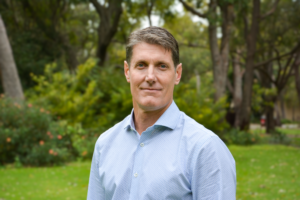
Dr Luke Twomey
Biography
CEO, Western Australian Marine Science Institute WAMSI (2017-current)
Luke is chief executive of the Western Australian Marine Science Institution and has been leading WAMSI’s strategic research programs and initiatives since 2017. He is a marine scientist with experience across the fields of environmental impact assessment, management, research and teaching in estuarine, nearshore and offshore environments, both in Australia and internationally.
As chief executive, Luke’s primary role is to drive planning for the long-term future of WAMSI and implement a strategic marine science approach for WAMSI and its partners, including the Western Australian Government, to deliver strategic multi-disciplinary marine research programs across Western Australia. He has overseen the completion of major WAMSI science programs, including the Kimberley Marine Research Program and the landmark Dredging Science Node, and provided strategic advice to government on the Pilbara coast, Exmouth Gulf, Shark Bay, and the south coast. Currently, he is delivering a major collaborative science program on the marine environment at Cockburn Sound in partnership with Westport as well as a comprehensive science plan for Shark Bay.
He holds a Doctor of Philosophy and Bachelor of Science, Honours (Class 1) from Curtin University, is a graduate of the Australian Institute of Company Directors, and holds a position on the National Marine Science Committee.
Using stochastic models to improve predictions of internal tide-driven currents and temperature
D. Rayson1, L. Astfalck2, N.L. Jones, A. P. Zulberti1, Y. Zheng1, A. Ponte3, M. Bertolacci4, E. Cripps2
1 Oceans Graduate School, The University of Western Australia, Perth, Australia
2 School of Physics, Mathematics and Computing, The University of Western Australia, Perth, Australia
3 Ifremer, Mational Institute for Ocean Science, Plouzané, France
4School of Mathematics and Applied Statistics, University of Wollongong, Wollongong, Australia
Abstract
The tides are the dominant ocean process in the tropical North of Australia where, roughly speaking, the water levels and currents change twice a day. Further offshore internal tides – internal gravity waves with tidal frequency – drive oscillations of currents at the surface and seabed, and water temperature, which begin to dominate the surface tide oscillations in deeper water. These oscillations appear to be at tidal frequencies, however closer inspection reveals that they are not completely phase-locked to the surface tide. The effect of this phase modulation is that classical tidal harmonic analysis becomes less useful for prediction. The cause of this phase modulation are random (stochastic) background ocean processes like eddies and spatio-temporal variations in vertical density stratification. Here we present a stochastic time-series modelling technique that can be used for prediction of these non-phase-locked internal tide-driven currents and water temperature. This approach is an example of interpretable machine learning, which is rapidly superseding and/or complementing traditional mechanistic modelling approaches for ocean predictions. A key advantage of this particular approach is that the predictive uncertainty is quantified and can easily be propagated into other models e.g. vessel movement predictions. There are a few key parameters at the core of the stochastic approach and we will discuss their interpretation in terms of limits to predictability at a given location. We will also discuss some current and potential operational uses for the approach.
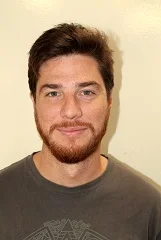
Rayson Matthew D
Biography
My research specialises in physical oceanography with an emphasis on numerical modelling and observing stratified flows on the continental shelf and coastal regions. My main work focuses on the metocean component of the ARC Industrial Transformation Research Hub for Offshore Floating Facilities. Previously, I was a postdoctoral scholar in the Bob and Norma Street Environmental Fluid Mechanics Laboratory at Stanford University, where I developed numerical modelling tools to study the circulation in the bays and estuaries along the Gulf of Mexico coast. I am an active user and developer of the SUNTANS unstructured grid ocean model.
Mapping sea surface currents using areal imagery
A. Zulberti¹, M. D. Rayson¹, P. Branson², J. Hansen³, R. Garcia³, L. Astfalck⁴, N. L. Jones¹
¹ Oceans Graduate School, The University of Western Australia, Perth, Australia
² Environment, CSIRO, Perth, Australia
³ School of Earth Sciences, The University of Western Australia, Perth, Australia
⁴ School of Physics, Mathematics and Computing, The University of Western Australia, Perth, Australia
Abstract
Obtaining reliable estimates of sea surface currents is critical for many operations in in both coastal and offshore environments. Despite this, obtaining appropriate measurements is a significant challenge in many applications – particularly those in remote environments or situations requiring rapid response. Fixed point current meters are the traditional measurement approach, though they only provide estimates at a single point and cannot always be deployed at short notice. Surface drifters may be deployed at short notice, though their measurement location cannot be precisely controlled. HF and X-band radar-based estimates provide spatial maps of currents, with many such operational systems in Australian waters, though these are typically limited to locations near-shore or offshore infrastructure. Methods based on synthetic aperture radar (SAR) typically resolve only a single current component, and traditionally limited to fast moving satellites with infrequent revisit times (several days). In recent years there has been a growing interest in the use of areal imagery of surface waves to quantify surface currents. While the power of these methods is recognised, they are so far under exploited as operational tools. This project aims to develop algorithms (inference, uncertainty quantification, data assimilation) for using the Multispectral Instrument on the Sentinel 2 satellite constellation over Australian waters, paving the way for an additional operational monitoring tool. The project also aims to develop hardware and algorithms to deploy such a system on low-altitude areal vehicles. In this presentation we demonstrate the potential for the method, and some early results of both the satellite and areal based projects.
Key Words
Ocean Surface Currents, Remote sensing,
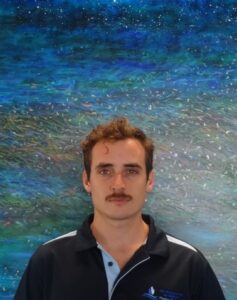
Andrew Zulberti
Biography
Andrew is a physical oceanographer. He trained in in Western Australia, and his experience is predominantly in Western Australian coastal waters. He is presently focussed on remote sensing of surface currents.
Two decades of surface current observations using drifters
Charitha Pattiaratchi
Oceans Graduate School and UWA Oceans Institute, The University of Western Australia
Abstract
Surface current observations, using surface drifters, have been made for more than 2000 years with the earliest measurements made using visual sightings of natural and/or man-made floating objects within sight of land or from an anchored ship that served as a reference. Some 400 years ago, subsurface drogues of different shapes and sizes tethered to surface floats were used to measure currents. The development of the global positioning system (GPS) allowed for more accurate position fixing through satellites but was of limited the accuracy (~100m) due to ‘‘selective availability’’ that deliberately degraded the publicly available signal due to military implications. The selective availability was removed in May 2000 that allowed for higher resolution position fixing (~10m). At this time, UWA Coastal Oceanography group embarked on the developing low-cost drifters to study surface currents at different scales extending from the nearshore region through estuaries and continental shelf regions to the deep ocean. Over this period more than 500 drifters have been deployed. This talk will detail the how the drifters have been developed as different ‘off the shelf’ technologies have become available and the scientific discoveries through data analysis with an emphasis on low cost. Initial deployments, using ‘surf zone’ drifters were used to examine nearshore processes such as rip and longshore currents and dispersion. With the availability of ‘SPOT’ satellite trackers extended deployments in the open ocean was possible. In the past 2-3 years, more than 200 drifters have been deployed in the north-west shelf (offshore Kimberley) region that allowed for the understanding of surface circulation in the eastern Indian Ocean. Analysis of these drifter tracks reveal major forcing mechanisms in the region through tides, winds (inertial currents), tropical cyclones and meso-scale eddies. An interesting result is that the dispersion studies indicate that irrespective of the scales of the motion (i.e. nearshore, open ocean), dispersion follows the 4/3 law proposed by Richardson (1926).
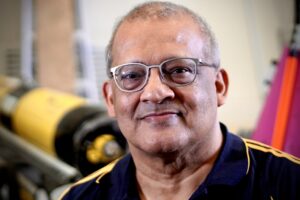
Charitha Pattiaratchi
Biography
Prof Chari Pattiaratchi is Professor of coastal oceanography at The University of Western Australia and leads the IMOS Ocean Glider facility. Research I have undertaken integrates ocean simulation, observation, and analysis to understand the role of physical processes in circulation and mixing, sediment transport, weather and climate, and marine ecosystem functioning in the coastal ocean and the adjacent deep ocean. He has pursued these objectives using two interrelated methodologies: (i) field measurements using a range of techniques, including routine shipborne observations including as chief scientist on many voyages in WA; new field techniques he has developed (e.g. ocean drifters); and, novel approaches, such as ocean gliders; and, (ii) regional ocean modelling for analysis and process studies, including the integration of models and observations. His work has also addressed the impact of human activities on the coastal environment, including the development of mitigation measures. He has developed a world-renowned research and training programme (for early career researchers and postgraduate and honours students) in coastal oceanography. To date, he has directly supervised more than 300 people (20 doctoral researchers, 77 postgraduate research students, and 173 honours/coursework-master’s thesis students).
From the Ocean to the Cloud – Now and the Future
Mark Rehbein1
1 Integrated Marine Observing System, Private Bag 110, Hobart, TAS, 7001 Australia, mark.rehbein@utas.edu.au
Abstract
Much is invested in the collection and publication of marine datasets, yet trustworthy data can be difficult to find and difficult to use. In this talk, we will explore a range of data streams collected by the Integrated Marine Observing System (IMOS) and accessible via the Australian Ocean Data Network (AODN), a cloud-based data system. We will highlight various high quality near real time datasets, outline their areas of coverage, and demonstrate several methods to access these data. We will then showcase several examples where IMOS data has been supplied to end users to assist in decision making through the development of visualisations and decision support tools. Finally, we will share a vision for the future of data discovery through IMOS that makes information easier to find and easier to use.
Key Words
Data Access, Data Discovery
Mark Rehbein
Biography
Mark Rehbein is Director of the Australian Ocean Data Network (AODN) at the Integrated Marine Observing System (IMOS). He has over 10 years software engineering experience specialising in marine data management and solutions to improve data accessibility and discovery, data visualisation and online data products. Mark has a further 14 years’ experience leading software engineering teams on corporate Intranet and research data themed projects. Prior to joining the AODN and IMOS, Mark worked at the Australian Institute of Marine Science as leader of the Data Systems Engineering team.
A global to port scale operational wave forecast with a focus on Australia and New Zealand coasts
Henrique Rapizo1, Emilio Echevarria1,2, Jorge Perez1 , Saulo Meirelles1
1 MetOcean Solutions, 5 Wainui Road, Raglan 3225, New Zealand
2 CSIRO Sea Level, Waves and Coastal Extremes
Abstract
An overview of the operational wave forecast run by the Meteorological Service of New Zealand is provided, showing new improvements in grid structuring and nesting. The forecast system consists of a global WAVEWATCH III model, which feeds full spectral boundaries to several regular (SWAN) and unstructured (WWM) nests that are used to resolve the finer coastal and port scale features. For the global model, a multi-level Spherical Multiple-Cell (SMC) grid was recently deployed. The SMC is a computationally efficient multi-resolution grid, which allows for varying levels of resolution in desired areas. By utilizing an efficient time-stepping scheme and merging longitudinal cells at high latitudes, the SMC grid can significantly increase the number of model sea points without an equivalent substantial increase in model run time. It offers enhanced resolution in areas critical to accurate wave modelling, such as shallow and nearshore areas, small islands etc not captured by typical global model grids. The new global grid has broad and significant improvements in the accuracy of global and nearshore wave simulations over the regular grid. Furthermore, we demonstrate the advantages of the new grid in improving the quality of wave boundaries provided to the coastal mode grids that are run operationally, allowing for their reduction in domain and size. Results for two port forecast cases are shown as examples.
Key Words
Wind-generated waves, operational forecasting, dynamical downscaling
Henrique Rapizo
Biography
Henrique is a Senior Physical Oceanographer at the Meteorological Service of New Zealand, leading the wave forecast system and operations. He specialised in numerical modelling, coastal dynamics and marine forecasting. Henrique has worked on many consultancy and coastal modelling projects and helped create tailored forecast products and solutions for a diverse range of clients such as ports, regional councils and offshore companies.
FOO Surface Waves Working Group Updates
Salman Khan (co-chair)
CSIRO, 107-121 Station St, Aspendale VIC 3195, salmansaeed.khan@csiro.au
Abstract
The FOO Surface Waves Working Group (SWWG) aims to provide advice and guidance on ocean waves capability and infrastructure needs in Australia in an operational context. It comprises members from the four pillars of FOO who convene on an approximately quarterly basis, discuss contemporary topics of importance related to surface waves, identify and document needs, gaps, and emerging priorities. This talk will provide updates from the working group, highlighting its recent, past, and prospective activities of broader interest to the FOO community.
Key Words
Surface waves
Salman Saeed Khan
Biography
Salman Khan co-chairs the FOO Surface Waves Working Group, leads the IMOS Satellite Remote Sensing Surface Waves sub-facility, and is a senior scientist at CSIRO, Environment. His work focusses on making available accurate and easily usable ocean wave and marine wind information from satellite missions, and integrating these with wave buoy and model data to provide holistic information from past, operational and emerging platforms for marine applications.
Australian National Coastal Ocean Modelling System (ANCOMS)
Emlyn Jones, CSIRO
Abstract
During the 2022 ACOMO/FOO meeting there was broad agreement to bring together the Australian coastal ocean modelling community to work towards scoping and implementing a national scale coastal ocean prediction system. This is also recognised as a priority through recommendation 4 of the National Marine Science Plan. Access to marine environmental information has historically assisted multiple stakeholders in addressing their tactical and strategic requirements, including governments (for reporting, compliance, planning, evaluation, impact statements, and risk analysis), NGOs (reporting, management, remediation plans), Defence (national security), AMSA (search and rescue, biosecurity, incident response), fisheries and aquaculture (stock assessment, habitat mapping, compliance, site management), oil and gas (exploration, incident response, infrastructure planning), energy (site selection), shipping and ports (routing, incident response), tourism (marine weather, vessel routing), and research institutions (teaching, climate projections, carbon accounting, system characterization, research). Unlike IMOS, there is currently no dedicated and coordinated national scale coastal ocean modelling system available to provide accurate information in the national coastal zone. The purpose of ANCOMS is to establish a coordinated national coastal ocean information system, with true national coverage, that is designed, applied, and sustained to support Australia’s coastal endeavours and deliver decision ready information to stakeholders. This presentation will provide an update to the FOO community on activity since ACOMO/FOO 2022.
Emlyn Jones
Biography
Emlyn Jones is a marine scientist working for CSIRO Environment based in Hobart. His research focusses on the development of operational ocean prediction systems and more specifically the use of data assimilation methods to improve the predictions of coastal dynamics and water quality. He is a member of the OceanPredict Marine Ecosystem Analysis and Prediction Task Team (MEAP-TT) and is on the steering committee for CoastPredict, a UN Decade of the Ocean Program. When he is not in the office trying to predict the ocean, you can find him in the shed brewing beer, riding a bike or trying to catch seafood for dinner.
Connecting land and sea: developing coastal research infrastructure for Australia
Michelle Heupel1
1 Integrated Marine Observing System, University of Tasmania, Hobart, Tasmania, Australia, 7000
Abstract
Climate change is altering our coastline at unprecedented rates, with sea level rise, coastal erosion, inundation and weather changes compounding the habitat loss already experienced due to human activity. These changes impact the built environment, natural resource systems and Australia’s infrastructure planning. Australia lacks a national, cohesive approach to monitor, understand and predict coastal changes. As a basis for enhanced understanding, planning and adaptation we propose a Coastal Research Infrastructure (CoastRI) to meet current and future needs of Australian researchers, industry and government. Proposed CoastRI activities include three major categories: observing coastal processes, cross-sector modelling and prediction, and data identification, management, and integration. Given the scope and breadth of issues facing our coastal systems this project is only feasible through synthesis and coordination among National Collaborative Research Infrastructure Strategy capabilities and close collaboration with other related agencies such as Geoscience Australia and the Bureau of Meteorology. CoastRI will provide integrated national-scale environmental and coastal climate capabilities not currently available. The program of work will include marine, estuarine, terrestrial, subsurface, modelling and analytical elements culminating in a great leap forward in our understanding of coastal conditions and support risk management strategies.
Key Words
Coastal oceanography, coastal processes, ocean observing
Michelle Heupel
Biography
Michelle Heupel is Director of Australia’s Integrated Marine Observing System
Next generation techniques for high resolution coastal modelling
Ivica Janekovic1
1 Oceans Graduate School, The University of Western Australia, Perth, Australia
Abstract
Coastal areas are increasingly becoming the focal point of human activities and future development. Ocean and wave models play a critical role in supplying essential data for practical and sustainable design considerations, as well as assessing environmental impacts. In response to this demand, models are being pushed to achieve higher resolutions. However, there are instances when even higher resolutions alone are insufficient. The key lies in enhancing the underlying model physics and facilitating dynamic information exchange between different models. To demonstrate the advantages of this approach, I will showcase the profound effects that coupling high-resolution hydrodynamics and wave simulations can have on coastal regions near Perth. Regardless of the impressive spatial and spectral resolutions and advanced parametrisation within the wave model, or the sophistication of the 3D ocean model counterpart, significant effects remain elusive unless both models are integrated simultaneously with feedback mechanisms. Thanks to modern hardware capabilities, this task can now be accomplished, even in real-time operations, allowing us to resolve coastal features at scales ranging from 10 to 100 meters.
Key Words
Coupled models, high resolutions, hydrodynamic and wave modellling
Ivica Janekovic
Biography
Ivica holds the position of Research Associate Professor at the Oceans Graduate School, UWA. He has ~25 years of expertise as a physical oceanographer, specialising in observing and modelling oceans across diverse scales. He is developing and using advanced techniques such as 4D-Var Data Assimilation, high resolution nesting, 2-way ocean-atmosphere-wave coupling, and applying them in real-time applications across various regions globally. Addressing industry-related challenges, leading projects, developing High-Performance Computing models, teaching and publishing are core of his activity. Currently, he serves as a member of the HPC Pawsey Merit Allocation Board, participates in the Champion User Advisory Group (CUAG) for Mercator Ocean International, and coordinates “Numerical modelling in environmental engineering” a core unit at the UWA.
Regional And Coastal Oceanography Experiences From Talisman Sabre 2023
Vanessa Hernaman1, CSIRO Bluelink Team2
1 CSIRO Environment, 107-121 Station St, Aspendale, VIC, 3195, vanessa.hernaman@csiro.au
2 https://research.csiro.au/bluelink/about/people/
Abstract
The Bluelink team established a range of bespoke prediction domains during the Talisman Sabre 2023 Defence exercise in July/August 203. In this talk we highlight three areas of effort.
- The importance of accurate bathymetric information for correctly predicting tide heights, currents and their timing in coastal regions was vividly demonstrated in the vicinity of Broad Sound.
- Folllowing the crash of an ADF MRH90 Taipan helicopter with four personnel on board into the sea, high resolution forecast domains were established to deliver particle tracking predictions to support search and rescue and, subsequently, forecast seafloor currents to enable safe recovery activities.
- A coupled hydrodynamic-wave model (SCHISM-WWMIII) was developed with variable mesh resolution (from 100 m nearshore, to 800 m over the Great Barrier Reef, and 5 km on the open boundary). Forecasts of water levels, currents, and wave characteristics were validated against observations from tide gauges, wave buoys, and satellite altimeter data. Lessons learnt included: requirements for quality mesh generation; importance of high-resolution bathymetry in nearshore regions and vertical datum considerations; impact of model tuning parameters on model performance; access to observations in near real-time; output formats to ensure utility for Defence purposes; forecast skill performance with respect to forecast lead time.
Key Words
Bathymetry, Currents, Waves, Ocean Modelling
Dr Vanessa Hernaman
Biography
Dr Vanessa Hernaman
Vanessa is a Senior Research Scientist in the Coastal Extremes Modelling and Projections team, where she utilises her expertise in unstructured mesh coastal ocean modelling, setting up and running the SCHISM-WWMIII coupled hydrodynamic-wave model under current and future climate scenarios for projects in Australia and the Pacific. Her research interests include using ocean observations and modelling to better understand variability and change in coastal and ocean processes (physical, biological, and chemical) and address questions around coastal risk assessment and management, and ecosystem-based management for estuaries and reefs. As part of Bluelink, Vanessa leads the wave-flow coupling in the Next Generation Littoral Prediction project.
Introducing a high-resolution south-eastern Australia coastal ocean forecast (SEA-COFS) using advanced data assimilation
Kerry, Colette1, Moninya Roughan, Gary Brassington
1 University of New South Wales, NSW, Australia, c.kerry@unsw.edu.au
Abstract
Along the coast of SE Australia, interactions between the East Australian Current (EAC) and coastal waters drive complex ocean currents and temperature gradients. Without accurate coastal ocean forecasts, various industries, community groups and government organisations lack information to make informed decisions. These include recreational and commercial fisheries, search and rescue operations, pollution spill management, recreational boating and shipping operations. The currently available ocean forecasts of the region are at 10km resolution: unable to capture the complexities of the coastal circulation over the narrow continental shelf (15-30km) and shelf break. Building on a decade of development in modelling and data assimilation, we present the SE Australia Coastal Forecast System (SEA-COFS). The system covers the EAC System as it transitions from a coherent jet to an energetic eddy field and uses advanced data assimilation to incorporate a number of novel data streams collected through IMOS (moorings, HF radar, gliders). Here we present a summary of how the system has improved our understanding of regional ocean circulation, predictability and observation impact in this dynamic region. We introduce our vision towards a high-resolution coastal ocean forecast for SE Australia and demonstrate how this could represent a step change in coastal ocean predictions.
Kerry Colette
Biography
Colette is a physical oceanographer who combines dynamical ocean modelling and ocean observations to study ocean circulation and predictability. She has expertise in coastal and regional ocean modelling and data assimilation. She leads the modelling and data assimilation team in the Coastal and Regional Oceanography Lab at UNSW where she and her colleagues use regional ocean models to understand Western Boundary Current dynamics, heat content and ocean warming, observation impact, and predictability. Her work has revolutionised high-resolution modelling, state estimation and the understanding of observation impact in the East Australian Current system: Australia’s dynamic Western Boundary Current.
NSW Nearshore wave transformation tool update
Doyle, T 1, Garber, S 2, Bradford, A 2, Taylor, D 2, Kinsela, M 3, Hanslow, D 1
1 Science, Economics, and Insights Division; Department of Planning and Environment, NSW Government, Sydney, NSW
2 Baird Australia, Sydney, NSW
3 University of Newcastle, Newcastle, NSW
Abstract
Since the development of the NSW Nearshore Wave Transformation Tool (NWTT) in 2017, NSW Department of Planning and Environment (DPE) has collected fundamental coastal datasets including high-resolution bathymetry covering the entire coastline and nearshore wave buoy data at 18 locations along the coast. The new data provides the opportunity to update and improve the tools by incorporating high-resolution seabed data in the underlying wave model and rigorously calibrating and evaluating shallow-water wave predictions in NSW coastal settings. NSW DPE also aims to make the tools available to external research and management stakeholders as an online coastal wave modelling application.
The Toolbox utilises a computationally efficient wave transformation matrix, hosted via a web-based interface with over 10,000 output locations to rapidly transform offshore wave conditions to 30 and 10 m water depths at 250m alongshore spacing. It provides users the ability to transfer either historical offshore Waverider buoy data or deep-water modelled hindcast data (up to 63 years from the ERA5 reanalysis dataset, 1959 to 2023) to a nearshore location of interest. Uses can also interrogate a 10-day wave forecast for each of these locations, which utilises the Australian Bureau of Meteorology’s operational offshore AUSWAVE forecast tool. The user can display nearshore wave conditions in spatial maps, timeseries plots, directional spectra plots, and download time series for offline use.
Additional features of the revised toolbox will enable the user to run an Extreme Value Analysis on the transformed nearshore wave conditions; to inform coastal planning, design of structures, and appropriate responses to coastal storms and maritime emergencies, as well as inform coastal management programs.
Key Words
NSW, Nearshore/ coastal waves, wave model, wave hindcast, wave forecast, coastal wave climate.
Dr. Tom Doyle
Biography
Tom is a senior coastal scientist within the NSW Department of Planning and Environment (Science Division), managing and co-leading the state-wide coastal science program, which aims to collect high resolution coastal data to underpin coastal management in NSW. This includes sediment data, seabed bathymetry, habitat mapping, coastal topography, and nearshore wave data. Tom also leads the nearshore wave monitoring project, where his team use Sofar Spotter buoys to help understand how waves change from the offshore, to breaking on our shorelines, and how they interact with our beaches. Tom has a background in coastal geomorphology and likes to use a diverse set of technologies to collect coastal data, some of these include drones, underwater echosounders, and laser sensors alongside ground truthing methods, to map the bathymetry, geomorphology and ecological aspects of the NSW coastal environment. Tom’s professional experience spans university, private and local government sectors. His research interests covers a range of topics from foredune geomorphology and ecology, dune evolution through time, coastal processes, human impacts of coastal systems, to the monitoring of various coastal environments using GIS and remote sensing techniques.
Advances in Bureau’s ocean forecasting services
Gary Brassington1, Bureau Bluelink Team
1 Bureau of Meteorology, 700 Collins St, Docklands, VIC, 3008, gary.brassington@bom.gov.au
Abstract
The Bureau of Meteorology has consolidated the implementation of advanced data assimilation, Ensemble Kalman Filter, delivering sustained performance gains of OceanMAPS against all variables. The system compares favourably against other international systems. We continue to have a positive impact on defence operations both with direct ocean forecast data services as well as enhanced regional forecasts. The US Coast Guard is also achieving positive search and rescue outcomes based on search area guidance derived from these systems. Services for port management are also sustained.
Another major advance in performance is demonstrated by a pre-operational version of OceanMAPS v4.1i through optimising the EnKF and reducing the latency of the analysis. Improvements of between 10% to 20% in forecast accuracy are found for all state variables. The new system demonstrates leading performance against other international systems and provides the foundation for a 48-member ensemble for probabilistic forecasting. Implementation of this new system is scheduled for 2024.
Collaborations with our partners continue to grow to accelerate our developments. This includes our Bluelink partners, UKMO, universities, COSIMA-2 and IMOS. We continue to engage with the community to enhance the performance of the system into the future and extend its exploitation for Australia’s national benefit.
Key Words
Ocean Modelling, Data Assimilation, Bluelink, OceanMAPS, Operational Systems
Gary Brassington
Biography
Dr Gary Brassington is one of Australia’s leading researchers in ocean forecasting. He is the Bureau of Meteorology’s Senior Principal Research Scientist for Ocean Modelling and leads award-winning teams that research, develop and deploy operational ocean forecast systems, including the Ocean Model, Analysis and Prediction System (OceanMAPS). OceanMAPS is developed and sustained through a government partnership with the Bureau of Meteorology, CSIRO and the Australian Defence Force. Dr. Brassington has been the national representative for the OceanPredict science team since 2006 and the inaugural chair of the Expert Team on Operational Ocean Forecast Systems.
SWOT
Benoit Legresy & Gabriela Semolini-Pilo, CSIRO
Gabriela Semolini-Pilo
Biography
Dr. Gabriela Pilo is an oceanographer at CSIRO (Hobart). Currently, she leads the IMOS-OceanCurrent project and manages the real-time operations of Argo Australia. Her current focus is on ocean data visualisation, analysis, and dissemination.
